

What Happens When No One Ages Out
Across the country, most transition programs end when an individual turns twenty-two. After that point, many autistic adults face a familiar gap: they graduate from a system, but the system does not graduate with them. Employment, housing, and community connection remain persistent challenges — not because individuals lack potential, but because long-term support disappears.
Chapel Haven Schleifer Center (CHSC) was founded in 1972 on a different belief: that adults deserve the opportunity to keep growing throughout life, and that support should be continuous, not time-limited. More than fifty years later, that founding principle remains central to who we are — and it is the heart of what we will bring to one of the most respected stages in the field of neurodiversity research and practice.
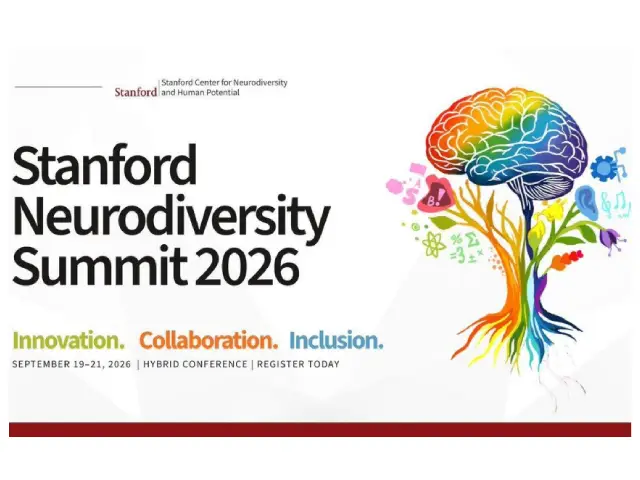
The Stanford Neurodiversity Summit 2026
From September 19–21, CHSC President Michael Storz will present at the Stanford Neurodiversity Summit 2026, hosted by the Stanford Center for Neurodiversity and Human Potential in Palo Alto, California. Now in its seventh year, the Summit brings together researchers, employers, educators, service providers, and self-advocates from across the country and around the world.
This year’s theme — “Building Strengths through Neurodiversity Innovation” — highlights real-world, strengths-based approaches that create lasting change for neurodivergent individuals and the communities they belong to. Michael will present a research poster in the Summit’s Employment track titled “Community, Connection, and Career Success: Fifty Years of Lifelong Support Building Pathways to Meaningful Employment.”
What We Will Present
The poster shares the story of Chapel Haven Schleifer Center’s integrated model: a community where residential life, self-advocacy, clinical services, and career development are woven together, not delivered in separate silos. Our CareerAbility program, founded in 2017, is not a stand-alone vocational intervention — it is the employment extension of everything we have built with each person across years of shared community life.
A dedicated Career Development Advisor paired with each participant, a Business and Community Relations Specialist working directly with employers, and an ongoing coaching and wraparound support model that continues well beyond job placement — these are the mechanics. The philosophy behind them is the same one CHSC has held since its founding: lifelong, community-integrated support leads to meaningful, sustained outcomes.
The Numbers That Reflect Fifty Years of Commitment
Our outcomes demonstrate what this model makes possible:
- More than 90% of CareerAbility participants reach the 90-day employment retention milestone, compared with a national average of 45.3% for individuals with developmental disabilities or autism.
- 96% of Customized Employment placements retain their jobs for one year or longer.
- 80% of students who graduate from our residential programs choose to remain part of the CHSC community.
- 100% of adults report satisfaction with the support they receive from their educational programming.
- 95% of families describe Chapel Haven as a safe, supportive, and welcoming community for their adult children.
These outcomes are not the result of a single program or intervention. They reflect fifty years of lifelong, community-centered support.
Why This Matters
The field of neurodiversity research is increasingly affirming what CHSC’s founders understood long before the evidence existed: when individuals are known, supported, and connected to a real community, they achieve outcomes that outlast any program, graduation date, or transition plan.
Presenting at Stanford gives us the opportunity to share our community’s story with practitioners, policymakers, and advocates from across the country — and to contribute Chapel Haven Schleifer Center’s lived experience to the national conversation on neurodiversity, employment, and lifelong support.
We are proud of what fifty years of belief in this community has built and honored to bring that story to the world.
Learn More
Information about the Stanford Neurodiversity Summit is available at stanfordneurodiversityproject.stanford.edu.
To learn more about Chapel Haven’s CareerAbility program and our model of lifelong, community-integrated support, visit chapelhaven.org/careerability or contact our Admissions team at admission@chapelhaven.org or 203-397-1714. Ext. 148